
E-Bike and Scooter Top-Speed Calculator
Enter the battery voltage, the motor’s KV (rpm per volt — often 8–15 for hub motors; check the spec sheet) and the wheel diameter.
How it works: motor rpm ≈ voltage × KV; speed = rpm × wheel circumference. Under a rider’s weight, real top speed is usually about 75–85% of the no-load figure, so the calculator uses 80%. Speed limiters in the controller override all of this.
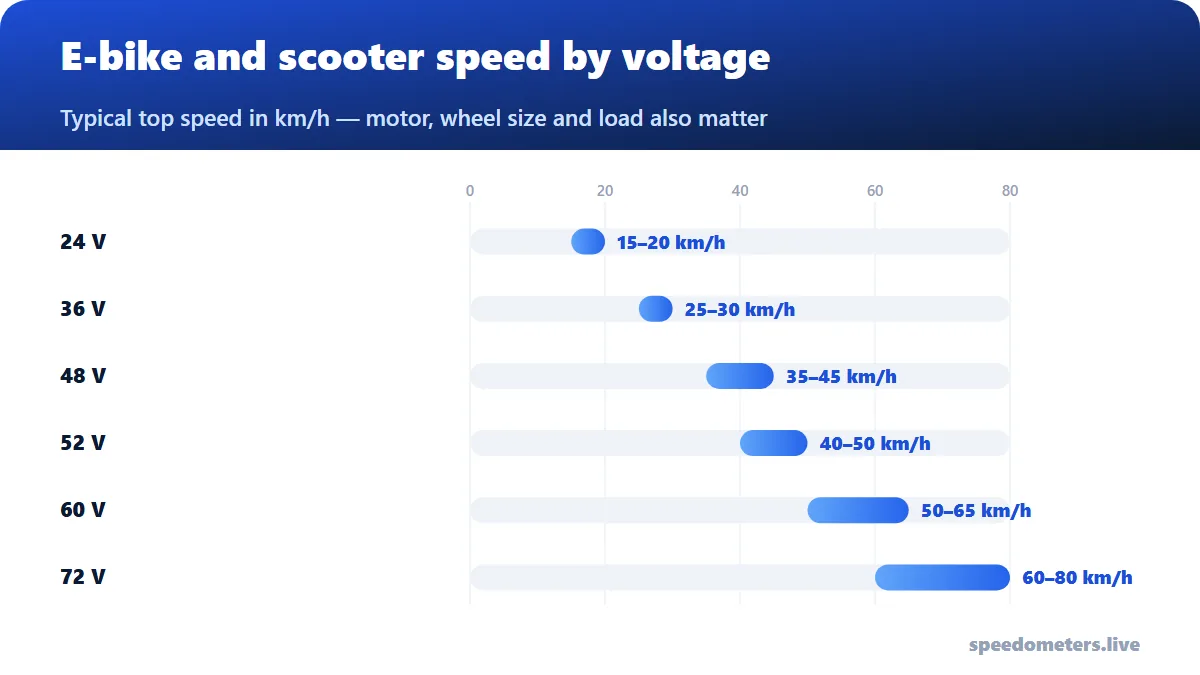
Typical Top Speed by Battery Voltage
| Voltage | Typical top speed | Usually found on |
|---|---|---|
| 24 V | 15–20 km/h · 9–12 mph | Kids’ scooters |
| 36 V | 25–30 km/h · 15–19 mph | Commuter scooters, EU pedelecs |
| 48 V | 35–45 km/h · 22–28 mph | Faster scooters, US Class 2–3 e-bikes |
| 52 V | 40–50 km/h · 25–31 mph | Performance e-bike conversions |
| 60 V | 50–65 km/h · 31–40 mph | Dual-motor scooters |
| 72 V | 60–80+ km/h · 37–50+ mph | High-performance scooters, light e-motorbikes |
These are typical ranges across common models, not guarantees. Big motors (several kW and above) put a vehicle in electric-motorcycle territory, with speeds of 80–120+ km/h — far beyond what is legal as a bicycle or scooter.
Legal Speed Limits for E-Bikes and Scooters
Faster vehicles are usually classed as mopeds or motorcycles and need registration, insurance and sometimes a license. Check your local rules before modifying a controller.
Measure Your Real Top Speed
Manufacturer speeds are measured with light riders on flat ground. To know your actual speed, mount your phone and open the bike speedometer; its Max figure records your top speed. Also see average cycling speed.
Frequently Asked Questions
How fast is a 48V e-bike?
Typically 35–45 km/h (22–28 mph) without a limiter. Legal e-bikes are limited to 25 km/h in the EU and 20–28 mph in the US.
How fast is a 36V scooter?
Usually 25–30 km/h (15–19 mph), often limited to 20–25 km/h for legal use.
How fast is a 72V scooter in mph?
Commonly 37–50 mph (60–80 km/h), and some high-power models go faster.
Does higher voltage always mean more speed?
For the same motor, yes — speed rises roughly in proportion to voltage. Across different motors, KV and wheel size can matter more than voltage.