GPS Speed vs. Speedometer Compared
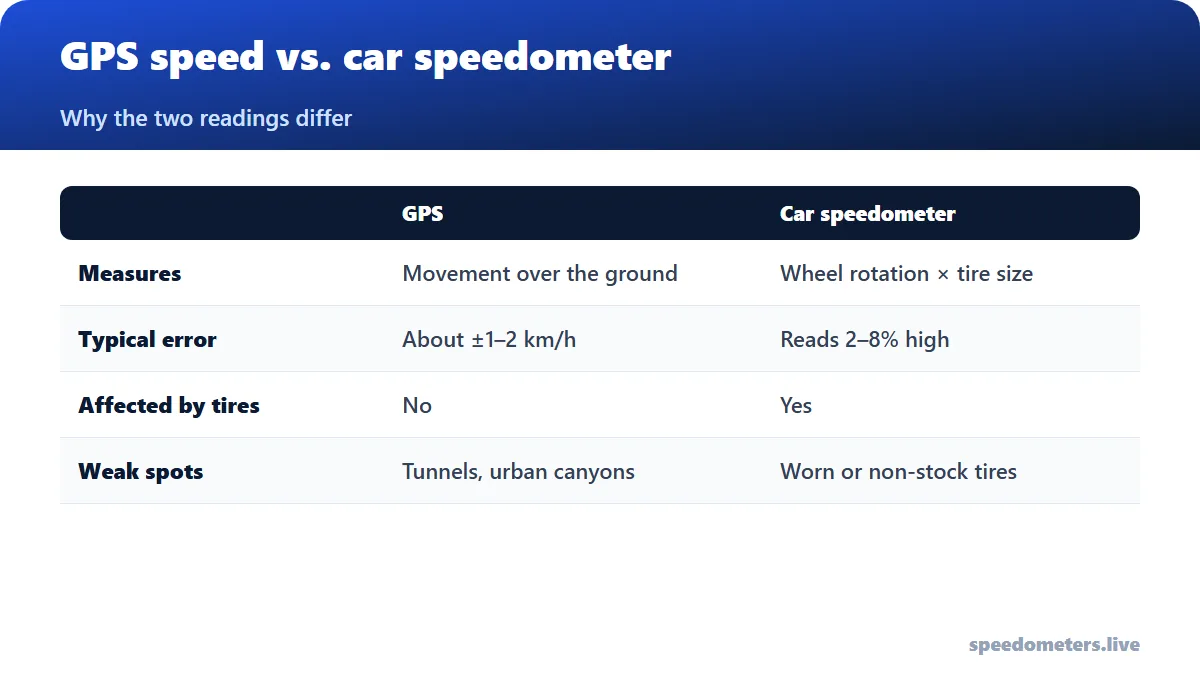
| GPS (phone or navigation) | Car speedometer | |
|---|---|---|
| What it measures | Movement over the ground, from satellite signals | Wheel or gearbox rotation × assumed tire size |
| Typical error | About ±1–2 km/h at steady speed | Reads high by about 2–8% by design |
| Affected by tire size | No | Yes |
| Update speed | About once per second | Instant |
| Weak spots | Tunnels, garages, urban canyons, heavy tree cover | Non-stock tires, worn tires, sensor faults |
| Legal reference | No | Yes |
Why GPS Speed Is So Accurate
Phones combine several satellite systems (GPS, Galileo, GLONASS, BeiDou), which improves accuracy in difficult places. See how a GPS speedometer works for the details.
When to Trust Your Speedometer Instead
- Tunnels and parking garages: no satellite signal at all.
- Between tall buildings: reflected signals cause jumps in speed.
- Hard acceleration or braking: GPS updates about once a second and may lag.
- Right after starting: the first 10–30 seconds before a solid fix are less reliable.
Test Your Own Car
Open the speedometer accuracy check, hold a steady speed on an open road, and enter the dashboard and GPS readings into the calculator. A dashboard a few percent above GPS is normal; a dashboard below GPS is a fault worth checking. Learn why speedometers read high.
Frequently Asked Questions
Is GPS speed more accurate than my car’s speedometer?
At a steady speed with clear sky, yes. In tunnels, cities with tall buildings or during rapid speed changes, the car’s speedometer is more dependable.
Can a speeding ticket be fought with GPS data?
Phone GPS logs are rarely accepted as proof against calibrated police equipment. Treat GPS as a check on your speedometer, not as legal evidence.
Why does Google Maps show a different speed than my car?
Google Maps uses GPS (true speed); your car reads slightly high by design. A difference of 2–5 km/h at highway speed is normal.